Sacred Falls has been closed to hikers since a deadly 1999 landslide. The only way to see it today is from above. Here's what you need to know.
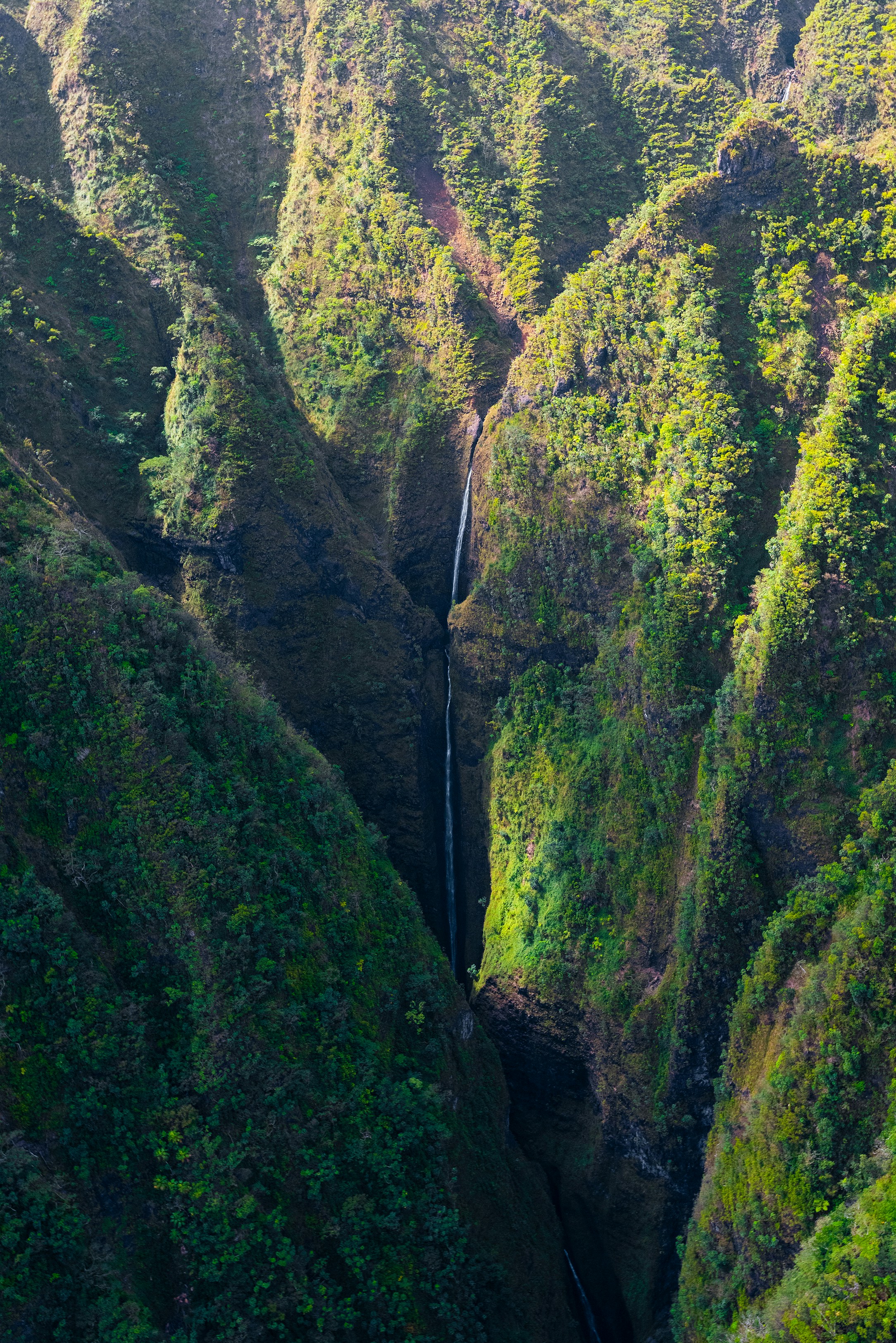
In May 1999, a landslide at Sacred Falls State Park killed eight people and injured dozens more during a Mother's Day hike. The trail has been closed ever since. Today, the only humans who ever see Sacred Falls up close are looking down from a helicopter.
That's not a marketing angle. That's just the reality of one of Oahu's most powerful places.
Sacred Falls, also known as Kaluanui Falls, drops roughly 80 feet into a narrow, jungle-lined gorge on Oahu's windward side in the Kaluanui Valley near the town of Hauula. Before the closure, it was one of the most popular hikes on the island. The trail ran about two miles each way through a stream canyon, and the payoff was a cold freshwater pool at the base of the falls.
The hike drew hundreds of visitors a week. Then the landslide happened, and that chapter closed permanently.
The park has been under a permanent closure order from the Hawaii Department of Land and Natural Resources since 1999. The cliff walls above the falls are geologically unstable, and the state has no plans to reopen the trail.
People still try to get in. The trail sees illegal access regularly, and it's not uncommon to see social media posts from hikers who ducked under the closure gates. Don't be that person. The state takes violations seriously, and more importantly, the hazard that killed people in 1999 hasn't gone away.
From a helicopter, the Kaluanui Valley opens up in a way that no ground-level view ever could. The falls sit deep inside a lush, steep-walled canyon that's completely untouched since the closure. There are no maintained trails, no footpaths, no sign of human activity down there at all.
What you get instead is raw Hawaii. The kind that existed before anyone built a parking lot or put up interpretive signs.
A few things that stand out from above:
Sacred Falls is most dramatic after rain, and Oahu's windward side gets plenty of it. The Ko'olau Mountains catch moisture coming off the Pacific and wring it out almost daily, especially in winter months from November through March.
Here's what affects visibility and flow:
No matter when you go, the aerial perspective is the only way to appreciate the full scale of the valley. You can't see the upper canyon at all from any road or accessible viewpoint.
On a Magnum Helicopters doors-off tour, Sacred Falls is one of the highlights on the windward coast leg of the flight. The route covers the full circuit of the island, so you're not just getting the waterfall in isolation.
You'll also see:
The windward coast section of the flight is consistently what guests talk about afterward. Sacred Falls tends to be the moment people go quiet and just look.
Before the closure, Sacred Falls carried deep meaning in Hawaiian culture. Kaluanui translates roughly as "the large pit" or "great pit," and the valley was considered a spiritually significant place. Some accounts describe it as connected to legends involving the demigod Kamapua'a.
That context matters when you're hovering above it. This isn't just a pretty waterfall that got closed due to bureaucratic caution. It's a place with real history, real loss, and real significance that the closure has, in a strange way, helped preserve.
Seeing it from the air feels appropriately respectful. You're witnessing it without intruding on it.
Sacred Falls is one of those Oahu landmarks that most visitors never actually see properly. The closure took it off the standard tourist map. That's worth thinking about. Sometimes the most significant places are the ones you have to make a real effort to get to.

Sacred Falls hasn't had a foot trail in over 25 years. The aerial view isn't a consolation prize. It's genuinely the best way to see the full scale of the valley and the falls together. Ground-level hikers could only see where they stood.
If you're planning a trip to the windward side, the Hauula and Laie area is worth your time on the ground too. Just leave Sacred Falls itself to the birds and the helicopters.